 Blaine
 Why Siding Fails Faster in California Creek Than It Should
Homes in the California Creek area sit close to the water and close to the border weather patterns that move through Whatcom County off the Salish Sea. That combination means three things hit the exterior of a house here harder than in most inland communities: salt-laden air, driving wind-blown rain, and a moss season that can stretch from early fall through late spring. None of these are dramatic events. They're slow, constant pressure, and that's exactly why so much siding damage in this area goes unnoticed until it's expensive.
Salt air corrodes fasteners and finishes over time, especially on the sides of a house that face open water or prevailing wind. Driving rain doesn't just wet a wall — it gets pushed sideways and upward under trim, around window returns, and into any gap in the water-resistive barrier. And moss doesn't just sit on a roof; it colonizes north-facing siding, wood trim, and anywhere shade and moisture linger, holding water against the wall assembly for months at a time. A siding product or installation that would hold up fine forty miles inland can start showing real problems in California Creek within a decade.
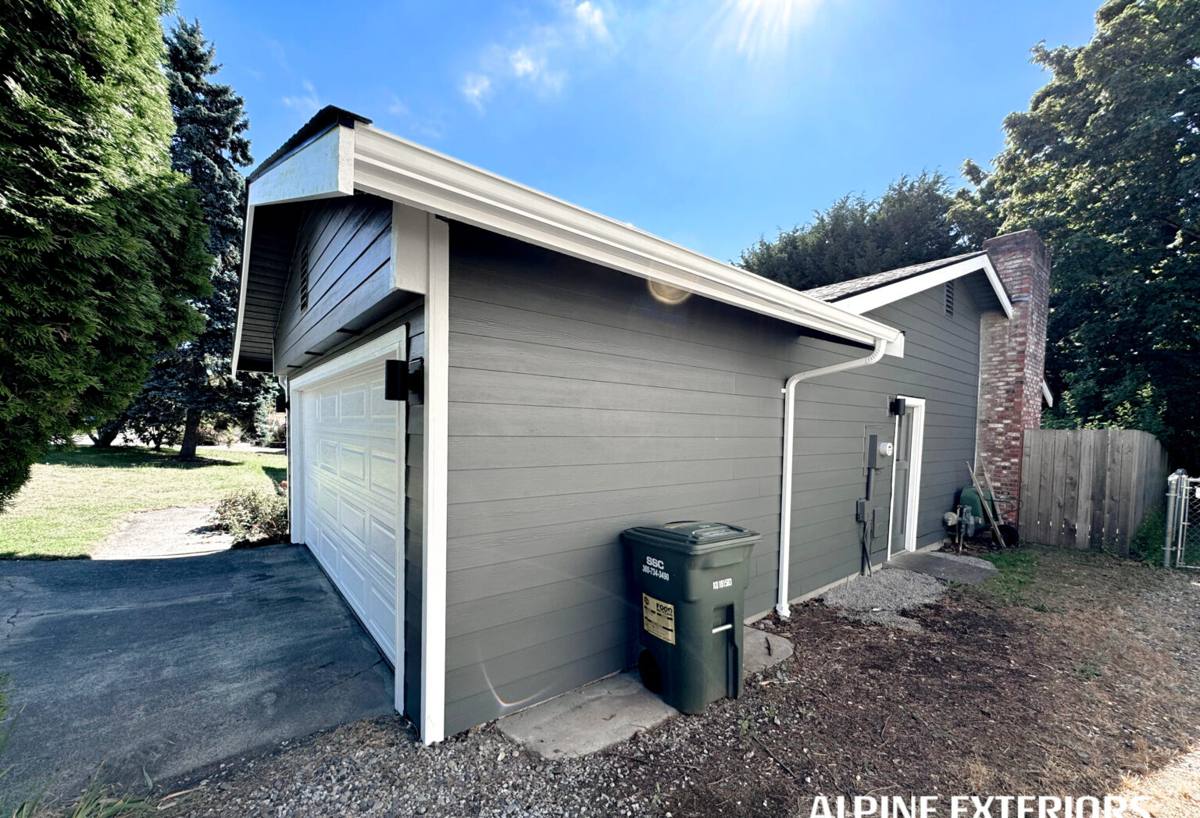
Signs a California Creek Home Needs Siding Replacement, Not Just Repair
Repair makes sense when the damage is isolated. Replacement becomes the honest recommendation once the underlying material or the water management behind it has been compromised broadly. Here's what we look for during an inspection:
- Soft or spongy spots when you press on the siding, especially near the bottom courses and around window and door trim
- Paint that's bubbling, peeling, or needs repainting every two to three years instead of holding a finish
- Persistent moss or algae staining that keeps coming back within a season of cleaning
- Visible cupping, warping, or delamination on wood-based or engineered wood siding
- Gaps opening up at seams, corners, or trim joints where caulk keeps failing
- Musty smells, staining, or soft drywall on interior walls that back up to exterior siding
- Siding that's original to a home built more than 20-25 years ago in this climate
If you're only seeing one or two of these in a small area, a targeted repair may be enough. If several of these show up across multiple walls, that's usually a sign the whole assembly — not just the visible siding — needs to be addressed.
What a Correct Siding Replacement Actually Involves
Full Tear-Off and Wall Inspection
A proper replacement starts with removing the old siding down to the sheathing, not installing over it. This is the only way to actually see what's happening underneath — soft sheathing, rusted fasteners, or water staining that tells us where the previous installation let water in. In a damp, salt-exposed area like this, skipping that inspection means guessing about the condition of the wall you're about to close back up.
Weather-Resistive Barrier and Flashing
The siding itself is really the second line of defense. The water-resistive barrier behind it, and the flashing at every window, door, deck ledger, and roof-to-wall intersection, is what actually keeps water out of the structure. Given how much wind-driven rain this area gets, we pay particular attention to head flashing above openings, kick-out flashing where rooflines meet walls, and proper lapping so water sheds outward at every layer instead of finding a way behind the cladding.
Rainscreen Spacing
A drainage gap between the barrier and the siding lets any moisture that does get past the surface dry out instead of sitting against the wall. In a climate with this much sustained dampness and moss growth, that gap is one of the more important details in the whole assembly — it's the difference between water passing through harmlessly and water being trapped long enough to cause rot.
Installation to Manufacturer Spec
Fastener placement, clearance from grade and rooflines, caulking at the right joints (and not at the wrong ones), and proper overlap all matter more than they get credit for. Most siding failures we see in this region trace back to installation shortcuts, not the material itself.
Why We Only Install James Hardie Fiber Cement
We don't install vinyl, LP SmartSide, primed spruce, cedar, or other fiber cement brands, and that's a deliberate standard, not a limitation of what we know how to work with. Vinyl expands and contracts significantly with temperature swings and can crack or warp with age, and it doesn't hold paint if a homeowner ever wants to change the color. Engineered wood products and untreated wood trim are more sensitive to sustained moisture exposure than fiber cement, which matters a great deal in a place where siding stays damp for long stretches at a time. Cedar is a beautiful, legitimate product, but it demands a maintenance commitment — regular refinishing, careful moisture management — that most homeowners underestimate until the upkeep becomes a recurring cost.
James Hardie fiber cement is non-combustible, dimensionally stable in wet climates, and holds a factory-applied ColorPlus finish that's warrantied against fading and doesn't require repainting on the timeline that wood or vinyl products often do. It's not the cheapest material on the market, and we tell homeowners that plainly. But for a house that's going to sit near the water in Whatcom County for the next several decades, it's the product we're willing to put our name behind.
Matching the Right Hardie Product to This Property
Hardie makes several product lines, and the right choice depends on the home's exposure, architectural style, and how much of the wall faces prevailing wind and rain.
| Product | Best Use | Why It Fits This Area |
|---|---|---|
| HardiePlank lap siding | Most traditional home exteriors | Classic look, wide color range, proven track record in wet coastal climates |
| HardiePanel vertical siding | Modern facades, accent walls, gables | Fewer horizontal seams for water to work into on high-exposure walls |
| HardieTrim | Window, door, and corner trim | Matches the durability of the field siding instead of pairing fiber cement with wood trim that fails first |
| HZ5 vs. HZ10 formulation | Climate-specific engineering | HZ5 is engineered for cold, wet, freeze-prone climates like Western Washington — the right baseline for this area |
We'll walk through color and profile options during the estimate, but the underlying product selection is about matching the engineering to the exposure your specific walls get, not just picking a look.
How the Project Works, Start to Finish
- Walk-through and assessment — we inspect the current siding, trim, and any visible water damage, and talk through what we find in plain terms
- Written estimate — scope, product selection, and price, with no pressure to sign on the spot
- Scheduling — we confirm a timeline that accounts for the wetter months here, since siding work needs reasonably dry conditions to install correctly
- Tear-off and wall inspection — old material removed, sheathing checked, any rot or damage addressed before anything new goes up
- Weather barrier, flashing, and rainscreen installation — the part of the job that matters most for long-term performance
- Hardie siding and trim installation — installed to manufacturer spec, not shortcuts
- Final walkthrough — we go over the finished work with you before calling the job done
What Drives the Cost of a Siding Replacement Here
| Factor | How It Affects the Project |
|---|---|
| Extent of hidden water damage | Rotted sheathing or framing found during tear-off adds repair scope before new siding goes on |
| Home size and wall complexity | More corners, gables, and dormers mean more cutting, flashing detail, and labor time |
| Product line and trim package | Panel vs. lap siding, and how much trim work is included, both shift material cost |
| Site access and exposure | Waterfront-adjacent and wind-exposed walls sometimes warrant extra flashing detail |
| Existing siding removal | Multiple layers of old siding or trapped moisture add disposal and labor time |
We don't quote a number without seeing the house — anyone who does is guessing. What we can say honestly is that the biggest cost swings almost always come from what's found once the old siding comes off, not from the new material itself.
Why Hiring a Crew That Already Works This Area Matters
Siding installation isn't identical everywhere. A crew that mostly works drier inland climates can install a wall assembly that looks fine and still lets water in within a few winters, simply because they're not used to designing for this much sustained moisture and wind-driven rain. Working regularly in Blaine and the surrounding Whatcom County communities means we've seen how houses near California Creek actually age — which walls take the worst weathering, where moss establishes first, and which flashing details actually hold up over time versus which ones fail quietly behind the wall.
That local pattern recognition doesn't replace following manufacturer specifications — it adds to it. It's the difference between installing siding correctly in general and installing it correctly for this specific stretch of coastline.
Get a Straightforward Look at What Your Home Needs
If your siding is showing its age, or you just want an honest read on whether repair or full replacement makes more sense for your situation, we're happy to take a look. There's no pressure and no sales script — just a clear assessment and a written estimate you can take your time with. Use the form below to request a free estimate.