 Blaine
 Building Decks for a Harbor Climate
Homes near Blaine Harbor sit in one of the more demanding decking environments in Whatcom County. You've got salt-laden air coming off Semiahmoo Bay and Drayton Harbor, long stretches of driving rain through fall and winter, and short, low-angle winter sun that leaves shaded areas damp for days at a time. A deck built to a generic spec sheet from a big-box store often struggles here. A deck built with this specific exposure in mind holds up.
This page covers composite decking specifically for Blaine Harbor properties: what the climate actually does to a deck over time, what a correctly built one requires, and how our process addresses it. If you're comparing composite decking in general, that's a broader conversation — this one is about getting it right in this particular spot on the map.
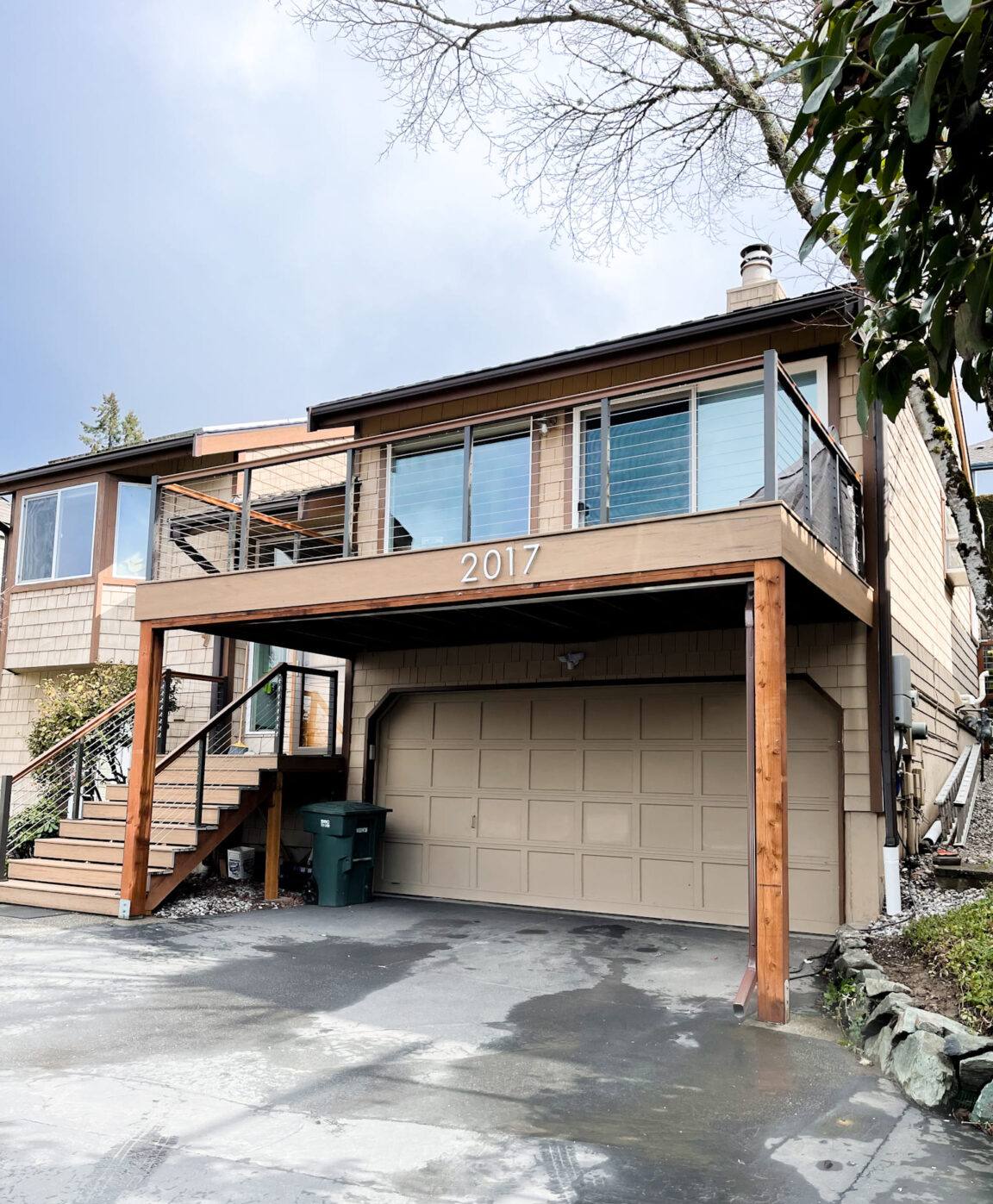
What Salt Air, Rain, and Moss Actually Do to a Deck
Three things wear down decks near the harbor faster than they would inland:
Salt Air and Corrosion
Airborne salt doesn't just affect boats and railings — it accelerates corrosion on any exposed metal hardware. Fasteners, joist hangers, and structural screws that would last decades in a drier, inland Whatcom County location can start showing rust streaks and pitting much sooner near open water. Once a fastener corrodes, it loses holding strength, and that's a structural problem, not a cosmetic one.
Driving Rain and Trapped Moisture
Rain here doesn't just fall straight down — wind off the bay drives it sideways into fascia boards, under railings, and into any gap where water can collect instead of shed. A deck that isn't sloped and ventilated correctly ends up with standing water pooling under boards, which leads to mildew, soft substructure, and premature wear on even a "low-maintenance" composite surface.
The Long Moss Season
Western Washington's moss season isn't a two-week nuisance — on a shaded, damp deck near the water it can run from early fall through spring. Moss and algae need moisture and organic debris to take hold, and once established on a deck surface, they make boards slick and genuinely dangerous underfoot, not just unsightly.
Choosing the Right Composite Board for This Environment
Not all composite decking is built the same, and the difference matters more here than in a dry climate. We look at moisture behavior first, appearance second.
| Decking Type | Moisture Resistance | Hardware/Corrosion Exposure | Moss & Algae Resistance | Typical Maintenance |
|---|---|---|---|---|
| Capped composite | High — cap layer sheds water, core doesn't absorb readily | Depends on fastener choice, not the board | Good with textured/capped surfaces; still needs cleaning | Occasional wash, no staining or sealing |
| Uncapped wood-plastic composite | Moderate — exposed core can absorb moisture at cut ends | Same as above | Fair — more prone to surface staining over time | Periodic cleaning; cut ends need sealing |
| Pressure-treated wood | Low to moderate — absorbs and releases moisture constantly | Higher risk of fastener corrosion staining the wood | Poor — grain holds moisture and organic matter | Annual cleaning, periodic staining/sealing |
For most Blaine Harbor homes, a capped composite board is the more sensible long-term choice — the cap layer is what actually resists the moisture cycling and algae growth this climate causes. But board choice alone doesn't make a deck last. The framing, fasteners, and drainage details underneath do most of the real work.
Fasteners, Framing, and Hardware: The Part Nobody Sees
This is where a lot of decks near open water fail early, and it's almost never the composite board's fault. It's what's holding it together.
- Fastener grade matters. In a salt-air environment, standard zinc-coated screws corrode faster than the deck surface wears. We use stainless steel or coated fasteners rated for coastal exposure on structural connections.
- Joist hangers and structural hardware need the same corrosion-resistant treatment as the visible fasteners — this hardware is load-bearing, and it's the last thing anyone thinks to inspect until something moves.
- Hidden fastener systems for the decking surface itself reduce the number of exposed penetration points where water and salt can work into the board over years of freeze-thaw and wet-dry cycling.
- Ledger board flashing where the deck attaches to the house has to be done correctly the first time — this is one of the most common sources of hidden rot in older decks, and it's a much bigger job to fix after the fact than to get right during installation.
Drainage and Airflow: Preventing the Moss Problem Before It Starts
Moss and mildew are a symptom of moisture that has nowhere to go. A deck built with the right slope and substructure ventilation dries out between rain events instead of staying damp for days. We pay attention to a few things that don't show up in a photo but make a real difference over the deck's life:
- Proper slope away from the house so water sheds instead of pooling against the foundation or ledger
- Adequate gap spacing between boards for airflow and drainage, sized correctly for composite's expansion behavior
- Clearance underneath the deck so the substructure can dry out rather than staying damp against the ground
- Joist tape or protective barriers on framing members exposed to standing moisture
None of this is visible once the deck is finished, which is exactly why it's worth asking a contractor about before work starts, not after.
Our Installation Process
A composite deck project at a Blaine Harbor property generally follows the same sequence, adjusted for the specific site conditions:
- Site assessment. We look at sun and wind exposure, drainage patterns, existing structure (if replacing an old deck), and how close the site is to open water, since that affects our hardware and fastener recommendations.
- Permitting. Deck projects typically require a permit through the applicable jurisdiction — we handle that process so you're not tracking down paperwork.
- Framing and structural work. This includes footings, ledger attachment and flashing, joists, and all corrosion-resistant hardware, built to current code for the loads and spans involved.
- Decking installation. Boards are laid with correct spacing and fastening for composite's thermal movement, with attention to drainage at every seam.
- Railings and finishing. Railing systems, fascia, and stair details are installed and checked for the same corrosion-resistant hardware standards as the rest of the structure.
- Final walkthrough. We go over the finished deck with you, including what maintenance it actually needs — which, with composite, is a lot less than people expect, but not zero.
Railings, Fascia, and the Details That Get Overlooked
Railings take more wind and moisture exposure than almost any other part of the deck, especially on properties with a clear line to the water. Composite or aluminum railing systems generally hold up better here than painted wood, which needs repainting far more often once salt air starts breaking down a paint film. Fascia boards along the deck's edge are another spot worth getting right — they're the first thing driving rain hits, and a poorly fastened or unsealed fascia board is often where moisture problems start on an otherwise solid deck.
Maintenance Checklist for Blaine Harbor Homeowners
Composite decking cuts maintenance dramatically compared to wood, but "low-maintenance" isn't "no-maintenance," especially in this climate. A short seasonal routine keeps a well-built deck looking and performing the way it should for decades:
- Sweep debris off the deck regularly, especially in fall when organic matter that feeds moss and mildew accumulates fastest
- Rinse or wash the surface a few times a year to clear salt residue and prevent buildup in the board's texture
- Check railing hardware annually for early signs of corrosion, particularly on properties closest to the water
- Keep gutters and downspouts near the deck clear so runoff isn't dumping extra water onto or under the structure
- Trim back vegetation that's shading the deck and keeping it damp longer than it needs to be
- Have the substructure checked periodically, especially on older decks being converted to composite decking on existing framing
Why Local Experience Matters Here
A contractor who mostly builds decks in drier inland areas can still build a technically correct deck — but they may not default to coastal-grade fasteners, may not think through drainage the same way, and may not know how aggressive the moss season gets on a shaded, harbor-adjacent lot. Working regularly in Blaine and around Whatcom County's coastal areas means those decisions aren't an afterthought — they're built into how we plan and price the job from the start.
If you're planning a new deck or replacing an aging one near Blaine Harbor, we're happy to take a look at your site and talk through what it actually needs. Reach out for a free, no-pressure estimate using the form below.