 Blaine
 Blaine Harbor's Roofing Challenge: Salt Air, Rain, and Moss
Homes in Blaine Harbor sit close enough to Semiahmoo Bay and the Strait of Georgia that salt-laden air is a daily fact of life, not an occasional nuisance. Add in Whatcom County's long, wet winters and the shaded, damp conditions that let moss take hold on north-facing slopes, and you've got a roofing environment that's noticeably harder on materials than what you'd find twenty miles inland. Asphalt shingles can absolutely hold up here, but only when the product, the underlayment, the ventilation, and the installation details are all matched to what this specific stretch of coastline actually does to a roof over the years.
This page is about one job done right in one place: asphalt shingle roofing for Blaine Harbor homes. Not a generic overview of shingles in general, but what actually matters when your roof deck is exposed to salt spray, driving rain off the water, and a moss season that can run from fall through spring.
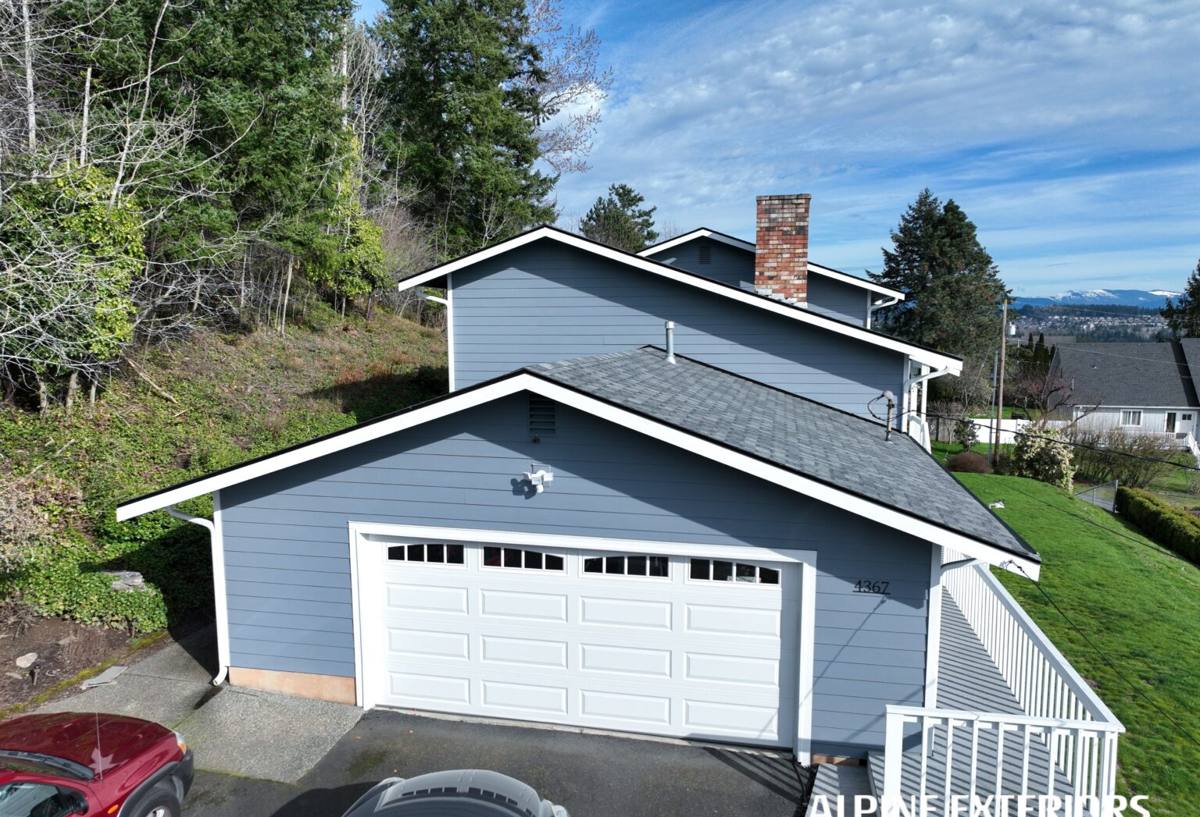
How Salt Air and Moisture Actually Damage Asphalt Shingles
Salt Air and Metal Components
Asphalt shingles themselves are fairly resistant to salt corrosion, but the metal components around them are not. Flashing, drip edge, nail heads, and roof vents are all vulnerable to accelerated corrosion when they're regularly exposed to salt-carrying air. Once flashing starts to pit or a nail head rusts through its coating, you get a point of failure long before the shingles themselves would normally need replacing. This is why material choice for the metal work matters just as much as the shingle brand near the water.
Driving Rain and Wind-Driven Water
Storms coming off the water tend to push rain sideways rather than straight down, which means water gets tested against every seam, lap, and fastener on the roof, not just the open field of shingles. A roof that would perform fine in a calmer inland setting can leak at the same details — valleys, sidewall flashing, roof-to-wall transitions — that a harbor-facing home in Blaine relies on holding up storm after storm.
Moss and Trapped Moisture
Shaded, north-facing, and tree-covered sections of roof stay damp longer through the Pacific Northwest's mild, wet winters, and that's exactly what moss needs to establish itself. Moss does more than look bad — its root structure lifts shingle edges, holds moisture against the granule surface, and speeds up the freeze-thaw and wet-dry cycling that ages a roof faster than it should.
Choosing the Right Asphalt Shingle for This Climate
Not every asphalt shingle product is built with the same priorities. For a Blaine Harbor home, the shingle should be selected with algae resistance, wind rating, and granule adhesion in mind — not just color and price.
| Shingle Type | Typical Fit for Blaine Harbor | Key Trade-Off |
|---|---|---|
| 3-tab shingle | Lower upfront cost, acceptable on detached structures or budget projects | Lower wind rating and shorter service life in exposed, storm-facing locations |
| Architectural (laminate) shingle | Our standard recommendation for most Blaine Harbor homes | Higher material cost, but better wind performance and granule durability |
| Algae-resistant (AR) shingle | Strongly recommended on shaded or north-facing slopes prone to moss and algae staining | Slight cost premium; does not eliminate the need for moss prevention, only slows it |
| Impact-rated (Class 4) shingle | Optional upgrade, most relevant if hail or falling debris is a known concern on the property | Higher cost; benefit is more about impact resistance than salt or moss resistance |
We walk each Blaine Harbor homeowner through this decision based on the roof's actual exposure — a shaded, tree-lined slope facing away from the water has different needs than an open roof taking direct wind and salt spray off the bay.
What a Correctly Installed Roof Includes
A shingle roof is only as good as the layers underneath it and the details at every edge, valley, and penetration. In a driving-rain, salt-air environment, cutting corners on any of these shows up as a leak or premature failure within a few years, not decades.
- Complete tear-off to the deck rather than layering over old shingles, so we can inspect and repair the sheathing underneath
- Synthetic underlayment rated for wind and water resistance, not the older felt products that degrade faster in wet climates
- Ice-and-water shield membrane at eaves, valleys, and roof-to-wall transitions — the spots most exposed to wind-driven rain
- Corrosion-resistant flashing and drip edge suited to a salt-air environment, not standard-grade metal
- Proper nailing pattern and fastener count matched to the shingle manufacturer's high-wind installation instructions
- Balanced intake and exhaust ventilation so moisture doesn't get trapped under the deck
Ventilation: The Part Homeowners Don't See
Ventilation rarely gets discussed when homeowners think about a new roof, but in a damp coastal climate it's one of the biggest factors in how long that roof actually lasts. Without balanced intake at the eaves and exhaust at the ridge, warm moist air from inside the attic condenses against the underside of the roof deck. Over a Blaine winter, that trapped moisture can rot sheathing, encourage mold, and shorten the life of the shingles from underneath — damage that has nothing to do with the weather hitting the outside of the roof at all. Every asphalt shingle roof we install includes a ventilation check as part of the process, not as an optional add-on.
Our Process for a Blaine Harbor Roof
The process is straightforward, but every step is shaped by what this location demands.
- On-site assessment. We look at slope orientation, tree cover, existing moss or algae staining, and how exposed the roof is to wind off the water before recommending a shingle and system.
- Material selection. Together we choose the shingle line, underlayment, and flashing package based on that assessment — not a one-size-fits-all package.
- Tear-off and deck inspection. We remove the old roofing down to the deck and repair or replace any damaged sheathing before anything new goes down.
- Installation. Underlayment, ice-and-water membrane at vulnerable areas, flashing, ventilation components, and shingles go on in that order, following manufacturer specifications for wind exposure.
- Cleanup and walkthrough. We clear the site of debris and nails, then walk the finished roof with the homeowner so you know what was done and why.
What Affects the Cost of an Asphalt Shingle Roof in Blaine Harbor
Costs vary by roof size, pitch, and complexity, so we don't quote a number without seeing the roof. But these are the factors that typically move the price up or down on a project in this area.
| Factor | Why It Matters Here |
|---|---|
| Roof pitch and complexity | Steeper slopes and multiple valleys or dormers take more labor and more flashing detail |
| Deck condition | Rot or soft sheathing found during tear-off adds repair cost but is essential to fix before re-roofing |
| Shingle grade chosen | Algae-resistant and architectural shingles cost more than basic 3-tab but hold up better to this climate |
| Ventilation upgrades | Adding or correcting intake and exhaust venting is a smaller cost now versus moisture damage later |
| Access and site conditions | Tree cover, tight lot lines, or difficult roof access near the water can affect labor time |
Maintenance Checklist for Blaine Harbor Homeowners
Even a correctly installed roof benefits from a bit of seasonal attention in this climate. Here's what we recommend homeowners keep an eye on between professional inspections.
- Clear moss and debris from shaded or north-facing slopes before it spreads, rather than waiting until it's visibly thick
- Keep gutters and downspouts clear so wind-driven rain has somewhere to go instead of backing up under the shingle edge
- Trim back overhanging branches to reduce shade, debris buildup, and physical abrasion on the roof surface
- Check attic ventilation isn't blocked by insulation or storage, especially after any interior remodeling work
- Have flashing around chimneys, vents, and skylights inspected periodically, since these are the first spots to show wear
- Schedule a professional look after major storms, particularly ones with strong wind off the water
Why Hire a Crew That Already Works Blaine Harbor
A roofing crew that hasn't worked this stretch of Whatcom County coastline will make reasonable-sounding decisions that still turn out wrong for this specific environment — standard-grade flashing where corrosion-resistant metal is needed, or a shingle chosen for looks rather than algae resistance on a shaded slope. Knowing which details actually matter here comes from having done the work in this exact setting: understanding how the wind comes off the bay, which slopes hold moss longest through the winter, and which flashing details actually hold up to salt air over time. That local knowledge doesn't show up on a spec sheet, but it shows up in how long the roof lasts.
If you're weighing a new asphalt shingle roof or a repair on a Blaine Harbor home, we're happy to take a look and walk you through what your specific roof needs — no pressure, no obligation. Use the form below to request a free estimate.