 Blaine
 Birch Point Sits Right in the Weather
Birch Point is one of the more exposed pockets of Blaine, Washington. Homes here sit close to the water, which means they take the full brunt of everything Whatcom County's marine climate can produce: salt-laden air blowing off the Strait, wind-driven rain that hits siding sideways instead of straight down, and a moss and algae season that runs longer than almost anywhere else in the state. Siding that would hold up fine twenty miles inland can start showing problems here in a fraction of the time.
That's not a reason to panic about your house. It's a reason to be picky about what goes on the walls and how it's installed. This page walks through what the Birch Point environment actually does to exterior siding, why we install James Hardie fiber cement exclusively, and what a correctly done job looks like on a home in this specific location.
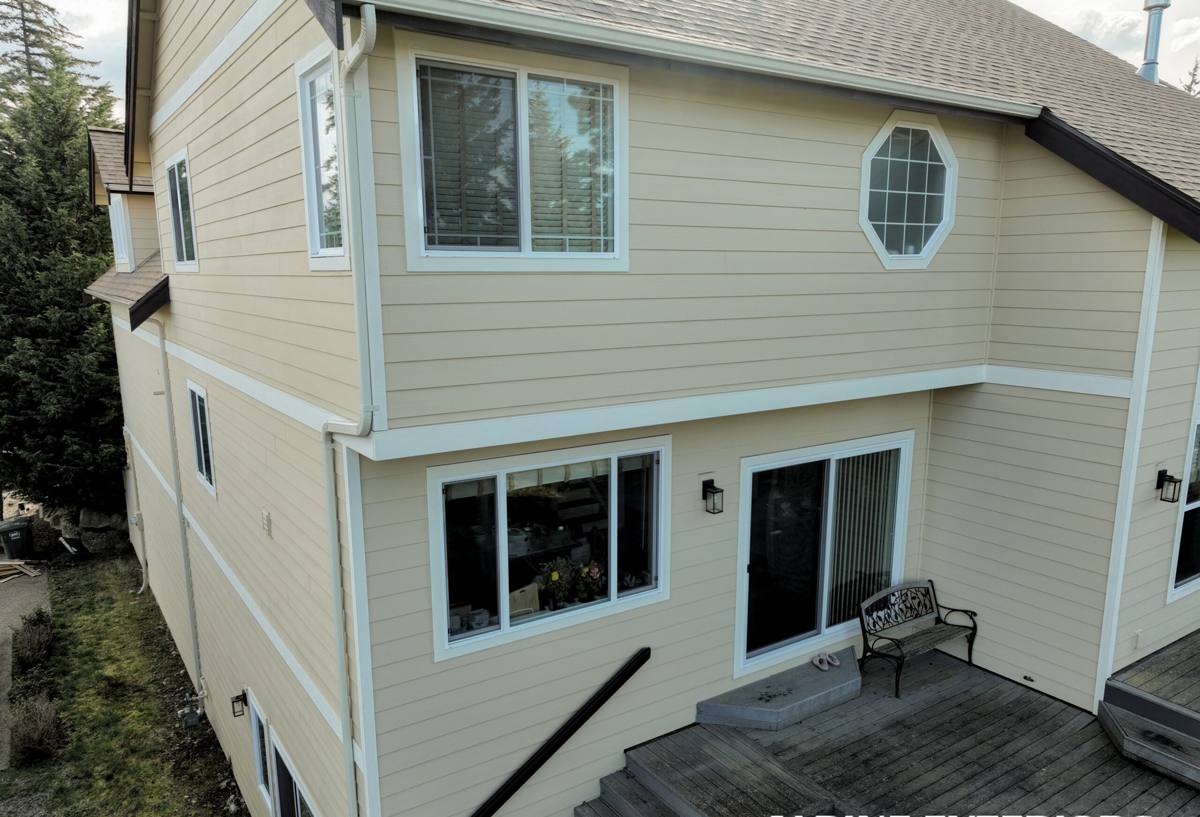
What the Marine Environment Actually Does to Siding
Salt Air and Corrosion
Airborne salt doesn't just sit on the surface — it works into fasteners, trim joints, and any exposed metal. Over years, that accelerates corrosion on the wrong hardware and can stain or degrade materials that weren't engineered with coastal exposure in mind. It also means the finish on your siding needs to resist chalking and fading faster than a product rated for a generic interior climate.
Wind-Driven Rain
Blaine gets plenty of rain, but the wind off the water is what makes Birch Point different. Rain doesn't just run down the wall — it gets pushed up under laps, into seams, and behind trim if those details aren't built correctly. A siding system that relies on caulk alone to keep water out, rather than proper flashing and drainage behind the cladding, is going to fail here sooner than it would in a calmer inland neighborhood.
Moss, Algae, and the Long Wet Season
Whatcom County's wet season stretches long, and shaded, north-facing, or tree-adjacent walls in Birch Point can stay damp for weeks at a stretch. That's the exact condition moss and algae need to take hold. Once organic growth gets a foothold on a porous or moisture-absorbent material, it holds even more water against the wall, which compounds the problem year over year.
Why We Install Only James Hardie Fiber Cement
We made a decision as a company to install one siding system — James Hardie — and nothing else. Not vinyl, not LP SmartSide, not cedar, not primed spruce. That's not a marketing angle; it's a standard we hold because of what we've seen happen to other materials in exactly this kind of coastal, high-moisture environment.
Fiber cement is non-combustible and dimensionally stable — it doesn't expand, contract, warp, or absorb water the way wood-based products can. James Hardie's ColorPlus factory finish is baked on and formulated to resist fading and chalking better than field-applied paint, which matters when you're facing years of salt air and UV off open water. Hardie also engineers specific product lines for different climate zones, so what goes on a Birch Point home isn't generic — it's built for the moisture exposure this location actually sees. Backed by a strong transferable warranty, it's the system we're comfortable putting our name behind here.
Choosing the Right Hardie System for This Location
Not every Hardie product or configuration is the right fit for every wall. For a Birch Point home, we typically evaluate:
| Product Consideration | Why It Matters Here |
|---|---|
| HZ5 engineered product line | Formulated for wetter, harsher climate zones — the right baseline for direct coastal exposure |
| Lap siding vs. panel systems | Lap siding sheds wind-driven rain well when installed with correct overlap; panel systems suit certain architectural styles but need tighter joint detailing |
| ColorPlus factory finish vs. field paint | Factory finish resists salt-air fading and chalking longer, reducing repaint cycles on exposed walls |
| Trim and fascia material | Should match the wall system's moisture resistance — mismatched trim is a common failure point on coastal homes |
We also walk each home's specific exposure — which walls face the water and prevailing wind, which sit in shade, which are protected by trees or structures — before finalizing the plan. A Birch Point home rarely has uniform exposure on all four sides, and the installation should account for that.
What Correct Installation Involves in a Coastal Setting
The product is only half the equation. Most siding failures we get called out to inspect — regardless of brand — trace back to installation shortcuts, not the material itself. In a wind-driven-rain environment like Birch Point, these details matter more than they would inland:
Drainage Behind the Cladding
A proper weather-resistive barrier and drainage plane behind the siding gives any water that does get past the surface a way out, instead of trapping it against the sheathing. This is standard on every job we do here — it's not an upgrade, it's a requirement.
Flashing at Every Penetration
Windows, doors, vents, hose bibs, light fixtures — every penetration through the siding is a potential entry point for wind-driven rain. Correct step flashing, head flashing, and kick-out flashing at rooflines are non-negotiable, especially on walls facing the water.
Fastening and Gaps
James Hardie specifies exact fastener types, spacing, and clearance gaps between siding and other materials (roofing, decks, trim). Getting this wrong voids warranty coverage and creates the small openings where moisture and salt intrusion start. We use fasteners rated for the exposure, not whatever's cheapest.
Starter Strips and Overlaps
Correct starter strip placement and lap overlap keep wind-driven rain moving down and off the wall instead of finding a path behind it. This is a detail that's easy to rush and hard to fix later without pulling siding back off.
Our Process on a Birch Point Job
- On-site assessment of each wall's exposure, existing siding condition, and any moisture or trapped-water issues already present
- Tear-off of old siding with an inspection of the sheathing underneath for hidden rot or moisture damage before anything new goes up
- Installation of a proper weather-resistive barrier and drainage plane
- Flashing at every window, door, and penetration, sized and placed for this exposure
- James Hardie installation to manufacturer spec — fastening, gaps, overlaps, and trim integration
- Final finish work, cleanup, and a walkthrough so you understand what was done and why
What Drives Cost on a Job Like This
| Factor | Impact |
|---|---|
| Extent of existing damage or rot | Hidden sheathing repair, if needed, adds time and materials beyond the siding itself |
| Home size and wall complexity | Cut-up walls with many corners, gables, or dormers take more labor per square foot than simple rectangular walls |
| Product line and finish selection | HZ5 panels, trim profiles, and ColorPlus color selections vary in material cost |
| Exposure-driven detailing | Water-facing walls often need more flashing and drainage work than sheltered walls on the same house |
| Access and site conditions | Waterfront lots with tight access, slopes, or limited staging area can affect labor time |
We give a written, itemized estimate before any work starts, so you know exactly what you're paying for and why — no vague lump sums.
Keeping Birch Point Siding Performing Long-Term
Even correctly installed siding benefits from basic homeowner attention in this climate. A few habits go a long way:
- Rinse pollen, salt residue, and grime off siding once or twice a year, especially on water-facing walls
- Keep gutters clear so overflow doesn't run down the siding face and feed moss growth
- Trim back vegetation that shades walls and keeps them damp longer than necessary
- Walk the exterior after major windstorms and check caulking, trim joints, and flashing for anything that looks disturbed
- Address moss or algae growth early with a gentle wash rather than letting it establish and spread
Why Hiring a Crew That Already Works Birch Point Matters
Siding installation isn't one-size-fits-all, and a crew that mostly works inland Whatcom County jobs isn't automatically thinking about wind-driven rain angles, salt exposure on fasteners, or which walls in a waterfront neighborhood need extra flashing attention. We work this coastline regularly, which means we're not guessing at what Birch Point homes need — we've seen how these conditions play out over time and build the installation around that from day one. A warranty is only as good as the install underneath it, and correct installation in this environment is a specific skill, not a given.
If you're considering new siding for a Birch Point home, we're happy to take a look and give you a straightforward, no-pressure estimate. Use the form below to get started.